
Guide
Carbs per hour, by duration and intensity
Calculator
Work out your carbs per hour
Two numbers in, one out. Turn a total carb load into an hourly rate, or an hourly rate into the total you need to carry.
Fill both fields and hit Calculate. Nothing is stored and nothing leaves your browser.
Bands follow the guide below: roughly 30-60 g/h on glucose or maltodextrin alone, 60-90 g/h only with a glucose-fructose mix, and 90-120 g/h in gut-trained ultra-endurance protocols. Educational, not medical advice.
Educational content, not medical advice. Individual tolerance varies; persistent GI symptoms or any race-related medical concern should be reviewed by a sports dietitian or doctor.
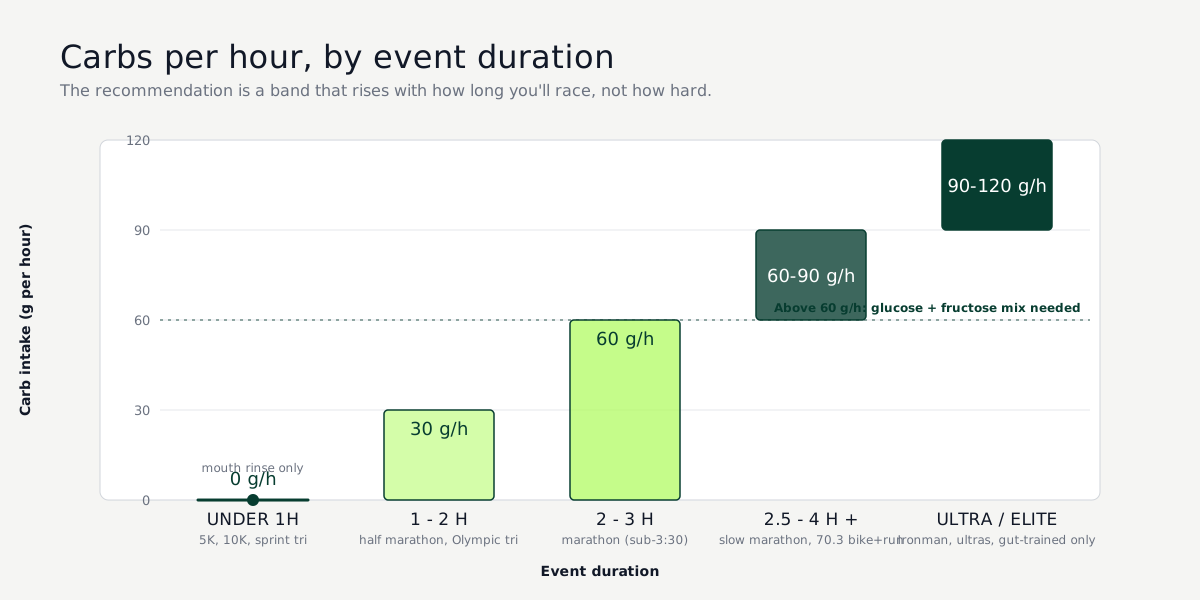
Carbs per hour (g/h) is the rate at which an endurance athlete takes in carbohydrate during exercise. Published guidance sets it as a band that scales with event duration - from nothing for races under an hour up to 90-120 g/h for gut-trained athletes in long events - not as a single universal number.
Ask ten endurance athletes "how many carbs per hour should I take?" and nine of them will say 60 grams. That number is everywhere, on every blog, in every coach's quick answer. It's also wrong about half the time. 60 g/h is the midpoint of a range, not a target. The right number depends on how long you'll be racing, how hard you'll push, what your gut has been trained for, and what fuel form you're using. This guide turns the midpoint back into a band you can actually plan around.
The number you've been quoted is too neat
The Burke et al. consensus and the ACSM position stand both publish carb intake bands, not point values. The most commonly cited table looks like this:
| Event duration | Carb intake target | Fuel type that works |
|---|---|---|
| Under 1 hour | 0 g/h (mouth rinse optional) | Water alone is fine |
| 1 to 2 hours | 30 g/h | Glucose or maltodextrin only |
| 2 to 3 hours | 60 g/h | Glucose or maltodextrin only |
| Beyond 2.5 hours | 60 to 90 g/h | Multi-transportable (glucose + fructose) |
| Ultra-endurance, elite | 90 to 120 g/h | 2:1 or 1:0.8 glucose-fructose, gut-trained |
Two things to read out of this. First, for events under an hour, you don't need to eat anything. Your glycogen stores cover it. A carb mouth rinse can sharpen the back end of a 5K or 10K, but ingesting calories at that pace mostly means you're swallowing fluid you didn't need and risking GI symptoms for no metabolic return. Second, the jump from 60 g/h to 90 g/h is a fuel-form change, not just a quantity change. Past 60 g/h, you have to use a product that contains fructose or you'll saturate the SGLT1 transporter (see the gut-training guide for the physiology).
Duration is the lead variable, not intensity
This is the part most athletes get backwards. They reason "I'm racing harder, so I need more fuel." The maths actually runs the other way. Carb oxidation rate is what you can absorb and burn, and it scales with time at sustained effort, not with how spicy that effort feels. The 60-90 g/h band assumes a steady aerobic intensity around tempo or just below threshold. Push above threshold for sustained periods and blood is shunted away from the gut, gut absorption drops, and your effective intake ceiling falls, not rises.
A practical way to think about this:
- Short and hard (under 90 minutes at high intensity): your problem is glycogen depletion, not refueling rate. Top up with a small dose pre-start and you're done.
- Long and steady (over 2 hours at tempo): your problem is sustained refueling. Hit 60 g/h minimum, push toward 90 g/h if your gut handles it.
- Long and hard (over 4 hours with sustained surges): both. You need the high-end fueling rate and a strategy to take it in during the steady stretches, not the climbs.
Heat amplifies the same effect. Above roughly 28°C, gastric emptying slows; your trained 90 g/h tolerance might land at 70 g/h on a hot day. Plan the floor of the band, not the ceiling, when the forecast goes red.
The first-hour rule: ramp in, don't front-load
The single most common pacing mistake is the front-load. "I feel great in the first hour, let me bank some carbs while I can." It backfires for two reasons. First, in the opening 30-45 minutes your body is still settling into the effort; nutrient flow is not yet optimal and a big bolus tends to sit. Second, carbs you take early don't bank, they oxidize at the same per-hour ceiling as carbs you take later. There is no front-loading.
The race-day pattern that works:
- Minutes 0-30: nothing, or sips of water. The gun-to-first-fuel window is part of the warm-up.
- Minute 30: first intake at the bottom of your target band. Settle the gut into "we're working now."
- Minutes 30 to final 30: steady 25-30 minute intervals, hitting your target rate.
- Final 30 minutes: stop intake. Carbs taken inside this window don't reach your muscles in time.
Two practical implications. If your race is 90 minutes, you have one meaningful intake window (around minute 30) and that's it. Stick to 30 g/h, take one gel, and stop thinking about it. If your race is 4+ hours, you have 6-7 intake windows and the back half is where races are won or lost; the athletes who fade are almost always the ones who tapered off intake at hour 3 because they were suffering.
Caffeine: a multiplier, not a substitute
Caffeine is the most studied legal ergogenic aid for endurance sport. It works, the effect size is real (~2-4% performance improvement), and it stacks on top of carb intake rather than replacing it. The mechanism is two-fold: caffeine reduces perceived effort and it increases fat oxidation, which spares glycogen. Together with carbs, it lets you hold a higher effort for longer.
Practical dosing:
- 3-6 mg per kg of body weight, total dose, across the race. For a 70 kg athlete that's 210-420 mg.
- Peak effect is 45-60 minutes after ingestion. Time it for when you need it, not for "now."
- Don't stack with new carb products on race day. Caffeine can irritate the gut on its own. If you're trying both for the first time, you'll never know which one caused the problem.
- Withdraw or maintain, don't yo-yo. Some athletes "de-caffeinate" for the week pre-race; this can sharpen the response but only if you actually went without for 5-7 full days.
A simple race-day caffeine plan: one 50 mg dose 30-45 minutes pre-start, a 100 mg dose at the halfway point of a long race, and a 100 mg caffeinated gel 45-60 minutes before the planned final push. That's 250 mg total for a 70 kg athlete - well inside the band and timed to peak at the moments that matter.
Worked examples by race distance
These are starting points for a gut-trained athlete in temperate conditions. Adjust the floor by 10-15 g/h for heat, for new product, or for an untrained gut.
10K (35-50 minutes): no in-race fueling needed. Optional: half a gel 15 minutes pre-start to settle nerves. Caffeine 30-45 minutes pre-start at the high end of your tolerance.
Half-marathon (75-110 minutes): 30 g/h. One gel at minute 30, optional second at minute 60 if you're slower than 1:45. Glucose or maltodextrin only is fine; no need for multi-transportable products at this duration.
Marathon (2:30-4:30): 60 g/h, possibly 75 g/h for slower finishers. Two to three gels per hour or equivalent in sports drink. This is the threshold where a glucose-fructose mix starts to matter, especially for athletes finishing over 3:30.
70.3 / Half Ironman (4-6 hours): 75-90 g/h. Mostly liquid carbs on the bike for absorption, gels on the run when you can't carry bottles. Caffeine timed for the last 60-90 minutes of the run.
Full Ironman (9-15 hours): 70-90 g/h on the bike, 60-75 g/h on the run. Total carb intake over the day commonly lands at 700-1000+ grams. This is where gut training is non-negotiable; nobody finishes well at full Ironman intake without it.
The split in those last two lines is not a typo. You can take meaningfully more carbohydrate on a bike than on your feet at the same duration, which is why the bands above are sport-dependent once an event gets long. Cycling vs running fueling has the size of that gap at every duration and what to do with it.
What to do if you're new to the band
Start at the floor of the duration band, train at it for two long sessions, then push the rate up by 10-15 g/h every two weeks until you find your ceiling. The gut-training guide has the full protocol. The planner will scale its recommendation as your gut tolerance climbs; the band is a target, not a verdict.
Once you know the rate you are aiming for, the arithmetic of hitting it depends on how much each product actually carries. A 25 g gel and a 40 g gel are a different number of packets per hour for the same target. See the gels ranked by carbs per serving for where the ceiling sits, and the drinks ranked by carbs if you would rather take most of your fuel in the bottle.
Get a plan for your race
The bands above are the general rules. To turn them into a per-30-minute plan with specific products, fluid volumes, and caffeine timing for your race, open the NutriFinder planner. Enter your weight, the sport, the distance, and the conditions; it returns the carb target, the sodium target, the fluid target, and a timeline you can take to the start line. The planner runs on the exact bands and reference values cited in this guide, no black box.
Frequently asked questions
How many carbs per hour should I take for a marathon?
Around 60 g/h for most runners, and up to 75 g/h for finishers over roughly 3:30. That is two to three gels per hour or the equivalent in sports drink, and at that rate a glucose-fructose mix starts to matter. Start fueling at minute 30 and stop in the final 30 minutes.
Do I need to eat during a race shorter than one hour?
No. For events under an hour your glycogen stores cover the effort, and ingesting calories mostly adds GI risk for no metabolic return. A carbohydrate mouth rinse can sharpen the back end of a 5K or 10K if you want an edge.
Can I absorb more than 60 grams of carbs per hour?
Only with a product that pairs glucose with fructose. Glucose-only products saturate the SGLT1 intestinal transporter at roughly 60 g/h; adding fructose recruits a second transporter and lifts the ceiling to 90 g/h and, in gut-trained elite protocols, up to 120 g/h.
Should I take more carbs when I race at higher intensity?
No - duration, not intensity, is the lead variable. Carb targets scale with time at sustained effort, and pushing above threshold actually shunts blood away from the gut and lowers your effective intake ceiling. Plan by how long you will be out there.
When should I take my first gel in a race?
Around minute 30. The first half hour is part of the warm-up: take nothing or sips of water, then fuel at steady 25-30 minute intervals at your target rate, and stop intake in the final 30 minutes because those carbs no longer reach your muscles in time.
How much caffeine should I take during an endurance race?
A total of 3-6 mg per kg of bodyweight across the race - 210-420 mg for a 70 kg athlete. Peak effect comes 45-60 minutes after ingestion, so time doses for when you need them, and remember caffeine stacks on top of carb intake rather than replacing it.
Research and references
The numbers and protocols in this guide rest on the following peer-reviewed sources. Verify the dose, the side-effect profile, and the contraindications against the primary literature, not against any single source.
- Burke LM, Hawley JA, Wong SHS, Jeukendrup AE. 2011. Journal of Sports Sciences. Carbohydrates for training and competition. PMID 21660838
- Thomas DT, Erdman KA, Burke LM. 2016. Medicine & Science in Sports & Exercise. American College of Sports Medicine Joint Position Statement. Nutrition and Athletic Performance. PMID 26891166
- Jeukendrup AE. 2014. Sports Medicine. A step towards personalized sports nutrition: carbohydrate intake during exercise. PMID 24791914
- Spriet LL. 2014. Sports Medicine. Exercise and sport performance with low doses of caffeine. PMID 25355191