
Guide
The race-day fueling timeline, from 24 hours out to the finish
The race-day fueling timeline
Educational content, not medical advice. This is general guidance; individual responses vary, and any persistent GI or hydration issues should be reviewed by a sports dietitian.
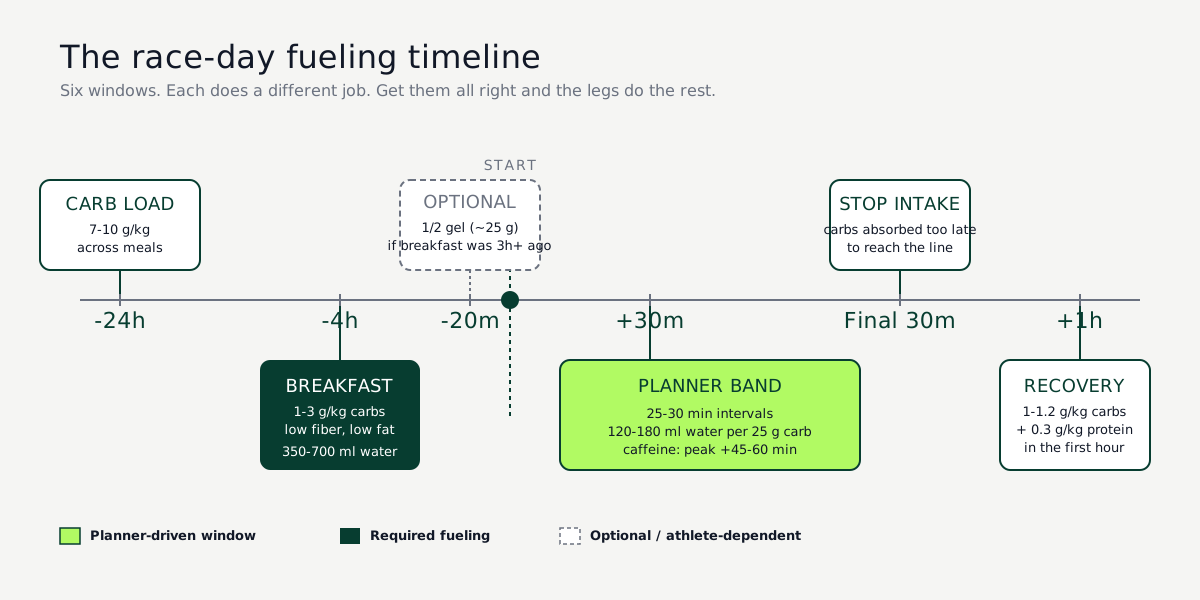
A race-day fueling timeline is the schedule of what to eat and drink in each window around an endurance event - the day-before carb load, the pre-race breakfast, the in-race intakes, and the post-race recovery meal. Each window has one distinct job, and the during-race band is only one of them.
Most fueling plans treat race day as a single moment: "take 60 g/h." The reality is that what you eat and drink in the 24 hours before the gun is at least as important as what you take in during the race. This guide walks through the full timeline - from the day before the event to the finish line - and what each window is for.
Our race-day fueling planner at planner.nutrifinder.it schedules the during-the-race middle band of this timeline for you: every intake, every interval, every product. The day-before and pre-race-breakfast windows are still on you, which is most of what this guide covers.
The day before: top up glycogen, don't overload
You spent the training block teaching your body to store and burn carbs. The day before the race is about topping up the tank, not stuffing it. The mistake first-time marathoners and Ironman athletes make is the giant pasta dinner. Two problems with that:
- Fiber, fat, and volume in a heavy evening meal slow gastric emptying and leave you bloated at the start.
- Glycogen is already mostly topped up by 24 hours out if you've been eating normally. The marginal benefit of a huge dinner is small; the marginal cost of a bad night's sleep with a heavy stomach is large.
What works better: carb-load across the day, not all at one meal. Aim for 7-10 g of carbs per kg of body weight spread across breakfast, lunch, an afternoon snack, and a moderate dinner. For a 70 kg athlete that's around 500-700 g carbs across the day, in normal portion sizes. Familiar foods only - race week is the worst time to try a new cuisine.
Hydration the day before is about colour-checking, not volume-chasing. Aim for pale yellow urine throughout the day. Drinking a litre extra at bedtime achieves nothing except waking up to pee.
Pre-race breakfast: 3-4 hours out
This is the meal that matters most. The goal is to top up liver glycogen (which gets depleted overnight) without ending up with food still in your stomach at the start.
- Timing: 3-4 hours before the start gun. Earlier than 3 hours and you'll be hungry; later than 2 hours and you risk having undigested food in your gut at race effort.
- Composition: 1-3 g of carbs per kg of body weight, low fiber, low fat, low protein. White bread with jam, plain oatmeal with honey, a banana and a small bagel - boring food that empties quickly.
- Drink: 5-10 ml of water per kg with the meal. For a 70 kg athlete, 350-700 ml. Coffee is fine if it's part of your normal routine.
What to avoid: high-fiber breakfasts (steel-cut oats, whole-grain anything), greasy eggs-and-bacon, large amounts of dairy if you don't normally tolerate it, anything you haven't eaten before a long training session.
The 60-90 minutes before the start
This window is contested in the literature. Two schools:
- Top-up with a small carb dose 15-30 minutes pre-start (a banana, a half gel, ~25-30 g) to keep blood sugar stable through the early miles.
- Skip it and let your body settle.
Most evidence favours a small top-up if you're prone to a slow start or have a long warm-up. The risk of the top-up is reactive hypoglycemia at the gun - a sudden insulin spike when your activity hasn't yet ramped up - but this is rare in trained athletes and mostly affects those who eat a big sugar load 60+ minutes pre-start.
Practical rule: if you ate breakfast 3+ hours ago, a half gel at -20 minutes is reasonable. If breakfast was 2 hours ago, skip it.
During the race: the planner takes over
This is where the carb-per-hour band from the planner kicks in. The general rules:
- First intake at 30 minutes. No earlier. Your body is still settling into the effort and won't appreciate work it doesn't need yet.
- Consistent 25-30 minute intervals are better than "I'll take it when I remember." The body absorbs carbs at a near-constant rate; bursts of intake just pool in your gut.
- Pair carbs with fluid. A gel without water sits like a brick. The standard ratio is 120-180 ml of water per 25 g of carb to keep gut concentration in the 6-8% range.
- Sodium scales with sweat. Use the planner's sodium target as a guide. Sodium is for hydration and EAH prevention - not anti-cramp insurance. Cramps are mostly neuromuscular fatigue from going harder than you've trained, not a salt problem (Schwellnus et al. 2011).
Common timing mistakes:
- Front-loading. Taking 90 g in the first hour because "I'm fresh and can handle it." Your gut can handle the same per-hour rate it trained for, regardless of how you feel.
- Forgetting the back half. Many athletes fuel well for hours 1-2, then skip intake at hours 3-4 because they're suffering. This is exactly when you most need the carbs.
- Caffeine timing. Caffeine peaks ~45-60 minutes after ingestion. If you want a boost at hour 2, take it at hour 1, not hour 2. A late caffeine dose mostly helps the cool-down.
The final 30 minutes
Caffeine and a small carb dose can buy you a measurable kick in the last 20-30 minutes of a hard effort. 45-60 minutes before the planned final push is the sweet spot for a caffeinated gel; the effects peak right when you need them.
After roughly the last 15-30 minutes of the race, additional carb intake doesn't reach your bloodstream in time to be useful. The planner stops scheduling intakes inside that window for that reason. Save the calories for after the line.
After the finish: recovery starts in the first hour
The 30-60 minutes post-race is the glycogen resynthesis window - your muscles are most receptive to refilling their tank in this window. Practical recovery intake:
- 1-1.2 g of carbs per kg of body weight in the first hour
- 0.3 g protein per kg alongside it (helps muscle repair, doesn't compete with carb absorption)
- Fluid to replace at least 150% of weight lost during the race
Recovery doesn't have to be a special drink - chocolate milk hits the carb-to-protein ratio remarkably well. Whatever you do, eat something within the first hour. The longer you wait, the longer the recovery curve. For the full refuel-rebuild-rehydrate breakdown, including how much the first hour actually matters when your next hard session is days away, see the recovery nutrition guide.
What to write down
After every race, log:
- What you ate the day before and the morning of
- Your carb intake during the race (planned vs actual)
- Any GI distress, when it started, what triggered it
- How the last hour felt (the back-half symptoms tell you the most)
A race log builds the data you need to fine-tune the next plan. The planner gives you a starting point. Your own pattern over 3-5 events turns it into something specific to you.
Get a plan for your race
For the middle band of this timeline (the during-the-race intakes), open the NutriFinder planner. It returns a per-30-minute schedule with specific products, fluid volumes, sodium, and caffeine timing, using the bands and reference values cited in this guide. The bookends - day-before carb load, pre-race breakfast, post-race recovery - are still your call, but the inside of the race is one click away.
Frequently asked questions
What should I eat the day before a marathon?
Carb-load across the whole day, not in one giant dinner: aim for 7-10 g of carbs per kg of bodyweight spread over breakfast, lunch, a snack, and a moderate dinner - around 500-700 g total for a 70 kg athlete, from familiar low-fiber foods. A huge pasta dinner mostly buys you bloating and a bad night's sleep.
What is the best pre-race breakfast?
1-3 g of carbs per kg of bodyweight, eaten 3-4 hours before the start gun, low in fiber, fat, and protein - white bread with jam, plain oatmeal with honey, a banana and a small bagel. Drink 5-10 ml of water per kg with it; coffee is fine if it is part of your normal routine.
Should I eat anything right before the start?
If breakfast was 3 or more hours ago, a small top-up of about 25-30 g of carbs (half a gel or a banana) at 20 minutes before the start is reasonable, especially if you are prone to a slow start. If you ate 2 hours ago, skip it.
When should I take my first gel during a race?
At minute 30, not earlier - your body is still settling into the effort. After that, fuel at consistent 25-30 minute intervals and pair each intake with water, roughly 120-180 ml per 25 g of carb, to keep gut concentration in the 6-8 percent range.
When should I stop eating during a race?
In roughly the last 15-30 minutes: carbs taken inside that window do not reach your bloodstream in time to be useful. The exception worth planning is caffeine - a caffeinated gel taken 45-60 minutes before your planned final push peaks exactly when you need it.
What should I eat after finishing a race?
Within the first hour: 1-1.2 g of carbs per kg of bodyweight plus about 0.3 g of protein per kg, and fluid to replace at least 150 percent of the weight you lost. It does not have to be a special product - chocolate milk hits the carb-to-protein ratio remarkably well.
Research and references
The numbers and protocols in this guide rest on the following peer-reviewed sources. Verify the dose, the side-effect profile, and the contraindications against the primary literature, not against any single source.
- Schwellnus MP, Drew N, Collins M. 2011. British Journal of Sports Medicine. Increased running speed and previous cramps rather than dehydration or serum sodium changes predict exercise-associated muscle cramping: a prospective cohort study in 210 Ironman triathletes. PMID 21148567
- Thomas DT, Erdman KA, Burke LM. 2016. Medicine & Science in Sports & Exercise. American College of Sports Medicine Joint Position Statement. Nutrition and Athletic Performance. PMID 26891166
- Stellingwerff T, Cox GR. 2014. Applied Physiology, Nutrition, and Metabolism. Systematic review: Carbohydrate supplementation on exercise performance or capacity of varying durations. PMID 24951297
- Kerksick CM, Arent S, Schoenfeld BJ, et al. 2017. Journal of the International Society of Sports Nutrition. International society of sports nutrition position stand: nutrient timing. PMID 28919842