
Guide
Recovery nutrition, by the hour and by the day
Educational content, not medical advice. Individual tolerance varies; persistent GI symptoms, unusual fatigue, or any race-related medical concern should be reviewed by a sports dietitian or doctor.
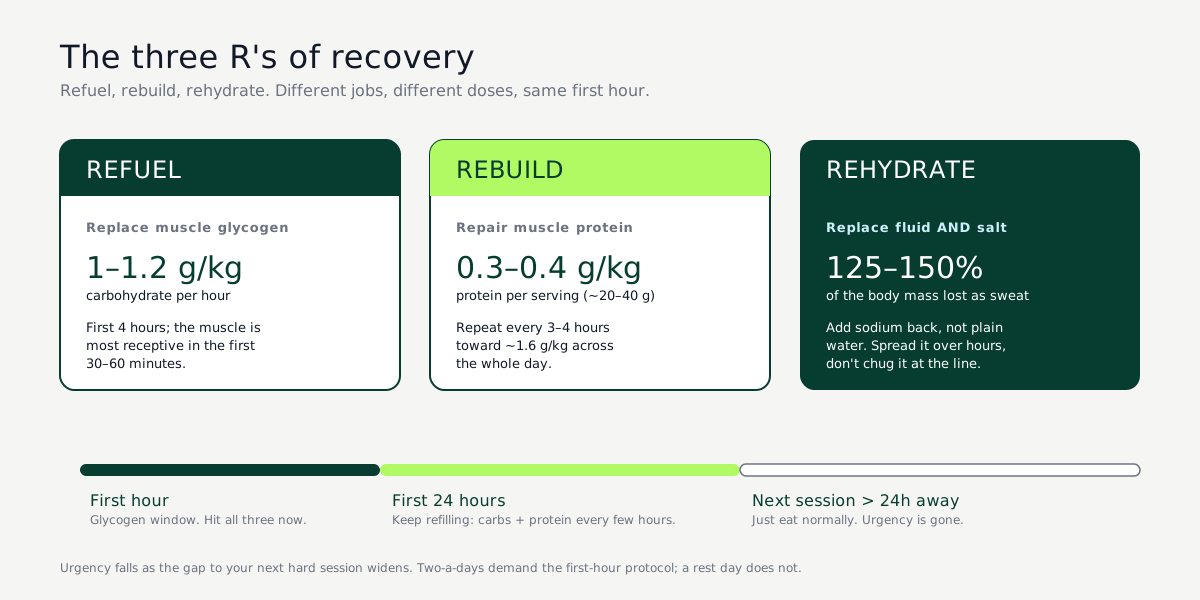
Recovery nutrition is the fueling done after a session to cover three jobs: refuel glycogen (1-1.2 g of carbs per kg per hour in the early hours), rebuild muscle (0.3-0.4 g of protein per kg per serving), and rehydrate (125-150 percent of the body mass lost, with sodium). How urgently each job matters depends on when you next train hard.
Most fueling advice stops at the finish line. The race-day timeline gets you to the line and across it; this guide covers the part almost nobody plans, the hours after you stop. Recovery is where the next session is won or lost, and it's also where the most calories get wasted on the wrong thing at the wrong time. Recovery is three separate jobs - refuel, rebuild, rehydrate - and the only thing they share is that the first hour is the cheapest time to start. This guide sizes each one and, just as importantly, tells you when to stop caring.
If you'd rather see your own numbers, the race-day fueling planner at planner.nutrifinder.it returns the fluid and sodium you'll need to replace based on your weight, sport, and conditions. The recovery doses below are the why behind topping that back up.
The first-hour window is real, but its size depends on tomorrow
You've read that there's a magic 30-to-60-minute "glycogen window" after exercise and that missing it wastes your session. Half true. Muscle is most receptive to refilling glycogen in the first 30-60 minutes, when blood flow is high and the glucose-transport machinery is upregulated. But the size of that advantage depends entirely on how soon you train again.
- Next hard session under 8 hours away (two-a-days, a stage race, a tournament): the window is everything. Start refueling immediately and aggressively. You physically cannot refill glycogen by morning otherwise.
- Next hard session 24 hours away (a normal training week): the window is a nice-to-have. You have all day to refill; total carbs over 24 hours matters far more than the first 60 minutes.
- Next hard session 2+ days away (post-A-race, a planned rest block): there is effectively no window. Eat normal meals, enjoy them, stop optimising.
This is the single most useful frame in recovery nutrition: match your urgency to the gap, not to the clock on the wall. An age-grouper who just finished a goal marathon and won't run hard for a week does not need a precision recovery shake in the chute. A triathlete with a brick session tomorrow morning does.
Refuel: glycogen, by the hour
Glycogen is the tank you emptied. Refilling it is the carbohydrate job.
- Aggressive target (tight turnaround): 1.0-1.2 g of carbohydrate per kg of body weight per hour for the first 4 hours. For a 70 kg athlete that's 70-84 g/h - the high end of what you'd take during a race, sustained afterward.
- Relaxed target (24h+ turnaround): just hit your normal daily carb total (5-10 g/kg/day depending on training load). Timing barely matters.
- Form: in the first hour, liquid and high-glycemic carbs refill fastest - the same fast sugars you rely on mid-race. A glucose-fructose mix still helps here because it recruits two transporters; see the carbs-per-hour guide and the fructose and maltodextrin ingredient notes for the absorption physiology.
A practical shortcut the research keeps validating: adding protein to a sub-optimal carb dose partly compensates. If you can't stomach 80 g of carbs in the first hour, 50 g of carbs plus 20 g of protein refills glycogen nearly as well as the higher carb dose alone, and it does the rebuild job at the same time.
Rebuild: protein, by the dose
Endurance training breaks down muscle protein too, not just glycogen. The rebuild job is about dose per serving and total per day, not timing heroics.
- Per serving: 0.3-0.4 g of protein per kg (roughly 20-40 g) maximises the muscle protein synthesis response. More in one sitting doesn't add much - the response saturates.
- Across the day: aim for ~1.6 g/kg/day total, spread across 3-4 servings every 3-4 hours. The even spread matters more than slamming it all post-session.
- Quality: a complete protein with enough leucine drives the response. Whey, dairy, eggs, and soy all clear the bar. The branched-chain story is more nuanced than supplement labels suggest - see the BCAAs and EAAs ingredient guides for why full EAAs beat isolated BCAAs for actual muscle repair.
If you are choosing a product to hit that 20-40 g window rather than eating a meal, recovery powders ranked by protein and recovery bars ranked by protein rank the catalogue by dose per serving.
The old "anabolic window slams shut in 60 minutes" claim has been walked back hard. As long as you've eaten protein within a few hours either side of the session and hit your daily total, the precise minute is noise.
Rehydrate: replace more than you lost, and salt it
You finish a race in fluid deficit, and you keep losing fluid afterward through sweat and urine. So you have to replace more than the scale says you lost.
- Volume: drink 125-150% of the body mass lost during the session. Weigh yourself before and after a long session (see the sweat-rate protocol in the sweat and sodium guide); every kg lost means 1.25-1.5 L to replace, sipped over the next 2-4 hours, not chugged at the line.
- Sodium is what makes it stick. Plain water in a sodium-depleted body just triggers urination and dilutes you further - in extreme cases toward hyponatremia. Replace sodium alongside the fluid; the electrolyte salts note covers the forms and amounts.
- Don't force it. Spreading intake over hours beats forcing a litre in ten minutes, which mostly comes back out.
A surprisingly good recovery drink that hits refuel, rebuild, and part of rehydrate at once is chocolate milk: it lands near the carb-to-protein ratio you want and brings fluid and some sodium with it. You don't need a branded product to recover well.
Putting it together: three recovery scenarios
The rest-week finisher (goal race done, nothing hard for 5+ days): eat a normal meal when you're hungry. Rehydrate with sodium over the rest of the day. Skip the rest. Your body will refill on its own timeline and chasing doses here buys nothing.
The standard training day (one quality session, next one tomorrow): get ~1 g/kg of carbs and 20-40 g of protein within an hour or two because it's convenient, then hit your normal daily carb and protein totals. Replace 1.5× your fluid loss with salt.
The double day (hard session this morning, another tonight): full first-hour protocol, no exceptions. 1.0-1.2 g/kg/h carbs for the 4 hours between, 20-40 g protein in the first serving, aggressive sodium-rich rehydration. This is the only scenario where the window genuinely makes or breaks the second session.
What recovery nutrition does not fix
Food can refill the tank and start the repair, but it can't substitute for the other half of recovery:
- Sleep does more for adaptation than any recovery shake. No dose of protein offsets chronic short sleep.
- Caffeine timing. A late-race or post-race caffeine hit can wreck the sleep that drives recovery; the caffeine guide covers the cut-off times.
- Genuine overreaching. If you're not bouncing back across weeks, the answer is load management, not more carbs. Persistent fatigue is a coaching and medical question, not a fueling one.
Supplements like creatine and omega-3 play a supporting role in adaptation over weeks, but they are seasoning on top of sleep, total energy, and protein - not a shortcut around them.
Get a plan for your race
The doses above are the general rules. To turn them into the fluid and sodium you need to replace for your race and conditions, open the NutriFinder planner. Enter your weight, the sport, the distance, and the conditions; it returns the carb, sodium, and fluid targets that the race-day timeline and this recovery guide are built around, no black box.
Research and references
The numbers and protocols in this guide rest on the following peer-reviewed sources. Verify the dose, the side-effect profile, and the contraindications against the primary literature, not against any single source.
- Thomas DT, Erdman KA, Burke LM. 2016. Medicine & Science in Sports & Exercise. American College of Sports Medicine Joint Position Statement. Nutrition and Athletic Performance. PMID 26891166
- Kerksick CM, Arent S, Schoenfeld BJ, et al. 2017. Journal of the International Society of Sports Nutrition. International society of sports nutrition position stand: nutrient timing. PMID 28919842
- Jäger R, Kerksick CM, Campbell BI, et al. 2017. Journal of the International Society of Sports Nutrition. International Society of Sports Nutrition Position Stand: protein and exercise. PMID 28642676
- Moore DR, Robinson MJ, Fry JL, et al. 2009. American Journal of Clinical Nutrition. Ingested protein dose response of muscle and albumin protein synthesis after resistance exercise in young men. PMID 19056590