
Guide
How to choose a recovery drink
Educational content, not medical advice. Individual needs vary; persistent fatigue, poor recovery, or any diet decision around a medical condition should be reviewed by a sports dietitian or doctor.
A recovery drink is a post-exercise mix that delivers both carbohydrate and protein, so it does two jobs at once: refill the muscle glycogen you burned and supply the protein your muscles use to repair. The number that separates a real endurance recovery product from a repackaged gym shake is the ratio between the two.
Recovery is the one category where the marketing number and the useful number diverge the most. The front of the tub shouts a protein figure, because protein sells, and you would be forgiven for thinking recovery is just "drink protein after training". For a lifter chasing muscle, that is roughly true. For an endurance athlete who just emptied their glycogen tank over two, three, or five hours, it is only half the job, and the smaller half. This guide is how to read a recovery product's numbers so you buy the one that refills your tank for tomorrow, not just the one with the biggest protein claim.
If you want to filter as you read, the recovery powders catalogue lists every recovery drink we track, 29 products across 9 brands, sortable by protein, carbs, sodium, brand, and price, and the recovery bars catalogue covers the solid-food equivalents. For the physiology behind the numbers, the recovery nutrition guide is the companion to this buying guide.
The ratio is the whole game
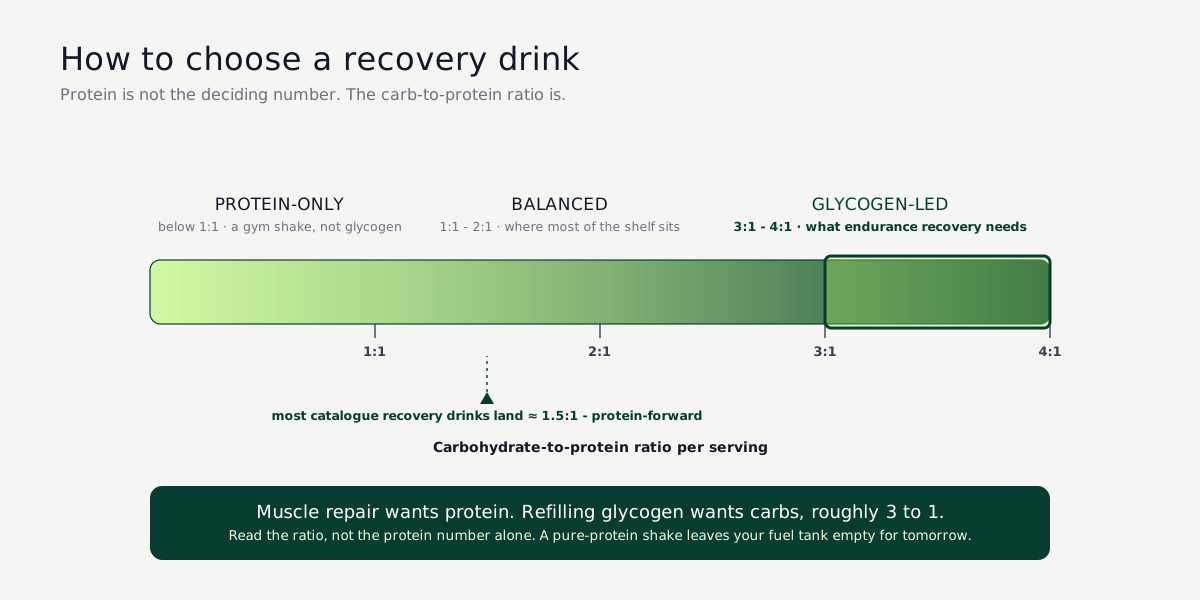
Start with what you actually depleted. A hard endurance session drains muscle glycogen, and refilling it is the rate-limiting step for how you feel and perform the next day. Glycogen is made from carbohydrate, so the carbohydrate is what refills the tank. Protein plays a supporting role: it drives muscle repair, and when you cannot eat much carbohydrate it helps the glycogen you do eat go further PMID 26891166. The practical shape most endurance guidance lands on is carb-led, protein-supported, in the region of three to one to four to one carbohydrate to protein PMID 28919842.
Now hold the catalogue up against that. Of the recovery drinks that state both numbers, most land near one to one to two to one, protein-forward, not carb-led. Only a handful reach the three-to-one carb-led ratio. A pure-protein shake such as AmacX's Vegan Protein Shake (30 g protein, under 4 g carb) or ProAction's Egg Protein (24 g protein, barely any carb) is an excellent muscle product and a poor endurance recovery product: it rebuilds the wall but never refills the tank. TORQ's Vegan Recovery, at roughly 20 g protein to 60 g carb, is the catalogue's clearest example of the carb-led shape. Read the ratio first. It tells you what the product is actually for.
Protein dose: enough, not maximal
Once the ratio is right, the protein number still matters, but as a floor, not a contest. The muscle-repair benefit of a single post-exercise feeding saturates around 0.3 g of protein per kilogram of body mass, roughly 20 to 25 g for most athletes; more in one sitting does not build more PMID 19056590. Recovery drinks in the catalogue that state protein cluster from about 15 to 21 g per serving, with a top around 30 g, so most of the shelf already sits in or near the useful band. A 30 g product is not "better", it is just more protein than one feeding can use. Spend the difference on getting the carbohydrate right instead. The ISSN protein position has the dosing detail if you want it.
Carbohydrate: match it to what you emptied
The carbohydrate side is where recovery products vary most, from near zero to 69 g per serving. A short easy session barely dents glycogen and needs little; a long or depleting session wants roughly 1.0 to 1.2 g of carb per kilogram per hour in the first hours after finishing to refill quickly PMID 21660838. That is why a 20 g protein / 20 g carb drink, fine after an easy hour, is thin after a five-hour ride: one serving replaces a small fraction of what you burned. Either pick a carb-led product or add carbohydrate around it, real food included. Sort the recovery powders catalogue by carbs when the session was long, by the most protein leaderboard when repair is the priority.
Sodium: recovery is also rehydration
You did not only burn fuel, you also lost fluid and sodium in sweat, and the post-session window is when you replace them. Some recovery products build sodium in deliberately: EthicSport's Recupero Extreme carries 650 mg of sodium per serving, and sodium variants of AmacX Recovery Shake (511 mg), Science in Sport's REGO Rapid Recovery (475 mg), and High5's Recovery Drink (400 mg) are meaningfully saltier than their standard siblings. On a hot day or after a heavy sweater's long effort, that sodium helps you hold onto the fluid you drink rather than passing it straight through. Work out how much you actually lost with the sweat and sodium guide, then read the variant, because the same product name can hide very different sodium.
Powder or bar: format follows the moment
The recovery choice is not only what is in it but what form it takes. A powder mixes with water or milk, goes down easily when you have no appetite, and rehydrates while it refuels, which is why it is the default straight after a hard finish. A recovery bar is solid food you can carry and eat later, useful when the drink is not to hand or when you would rather chew than sip. The recovery bars catalogue runs 44 products across 9 brands, protein-forward at around 15 to 20 g with the CLIF BUILDERS line at 20 g, though note some bars filed here are really energy bars with a little protein bolted on, such as the 5 g Hammer Bar. Read the same ratio you would on a drink. If it is nearly all protein and almost no carb, it is a snack, not endurance recovery.
Do you even need a product?
The honest answer for many sessions is no. After an easy or short session, your next normal meal does the whole job, and a dedicated recovery product buys you nothing. Reach for one when the timing or the depletion makes real food impractical: a hard session with a short turnaround before the next one, a long depleting effort where you finish with no appetite, or a race block with two sessions in a day. That is when getting carbohydrate, protein, and fluid in quickly and reliably actually matters PMID 28919842. The rest of the time, a product is convenience, not necessity, and it is fine to buy it as convenience as long as you are not paying for a claim you do not need.
Choose by use case
| Your situation | Recovery choice | Why |
|---|---|---|
| Long, glycogen-depleting session | Carb-led drink (3:1) or add carbs | Refilling the tank is the rate-limiter |
| Two sessions in one day | Carb-led drink, taken immediately | Fast refuel before the next effort |
| Hard session, hot day, salty sweater | Sodium variant (400 to 650 mg) | Replaces fluid loss, holds onto what you drink |
| Strength or muscle focus, low depletion | Protein-forward product (about 0.3 g/kg) | Repair is the job; glycogen barely touched |
| No drink to hand, eating later | Recovery bar with a real carb number | Solid-food equivalent; still read the ratio |
| Easy or short session | Your next meal | Real food covers it; a product adds nothing |
A four-step buying process
- Match the ratio to the session. After a depleting endurance effort you want carb-led, roughly 3:1; after low-depletion strength work, protein-forward is fine. The recovery nutrition guide explains why.
- Check the protein clears the floor, not the ceiling. Around 20 to 25 g (0.3 g/kg) is the useful dose; more is not better, so do not pay for a bigger protein claim you cannot use.
- Size the carbohydrate to what you burned, and add sodium via the sweat-sodium guide if the day was hot or long.
- Filter the recovery powders catalogue to that shortlist, sort by price, and put your top picks in compare. Then trial it in training; a recovery drink your gut dislikes helps nobody.
Get a plan for your race
Recovery is the back half of a fuelling plan, not a standalone purchase. To see your carbohydrate, sodium, and fluid targets for a specific race, and how the recovery window fits the rest of the day, open the NutriFinder planner. Its full race-day arc includes post-race rehydration and refuelling, so you can see what your body will actually be asking for at the finish. The first plan is free with no signup.
Research and references
The thresholds in this guide rest on the following peer-reviewed sources. Verify dose, side-effect profile, and contraindications against the primary literature.
- Thomas DT, Erdman KA, Burke LM. 2016. Medicine & Science in Sports & Exercise. American College of Sports Medicine Joint Position Statement. Nutrition and Athletic Performance. PMID 26891166
- Kerksick CM, Arent S, Schoenfeld BJ, et al. 2017. Journal of the International Society of Sports Nutrition. International society of sports nutrition position stand: nutrient timing. PMID 28919842
- Jäger R, Kerksick CM, Campbell BI, et al. 2017. Journal of the International Society of Sports Nutrition. International Society of Sports Nutrition Position Stand: protein and exercise. PMID 28642676
- Moore DR, Robinson MJ, Fry JL, et al. 2009. American Journal of Clinical Nutrition. Ingested protein dose response of muscle and albumin protein synthesis after resistance exercise in young men. PMID 19056590
- Burke LM, Hawley JA, Wong SHS, Jeukendrup AE. 2011. Journal of Sports Sciences. Carbohydrates for training and competition. PMID 21660838