
Guide
How to choose an energy gel
Educational content, not medical advice. Individual tolerance varies; persistent GI symptoms or any race-related medical concern should be reviewed by a sports dietitian or doctor.
An energy gel is a small sachet of concentrated carbohydrate - typically 20 to 40 g per gel from glucose, maltodextrin, or a glucose-fructose blend, sometimes with sodium and caffeine - designed to be swallowed mid-exercise as race fuel.
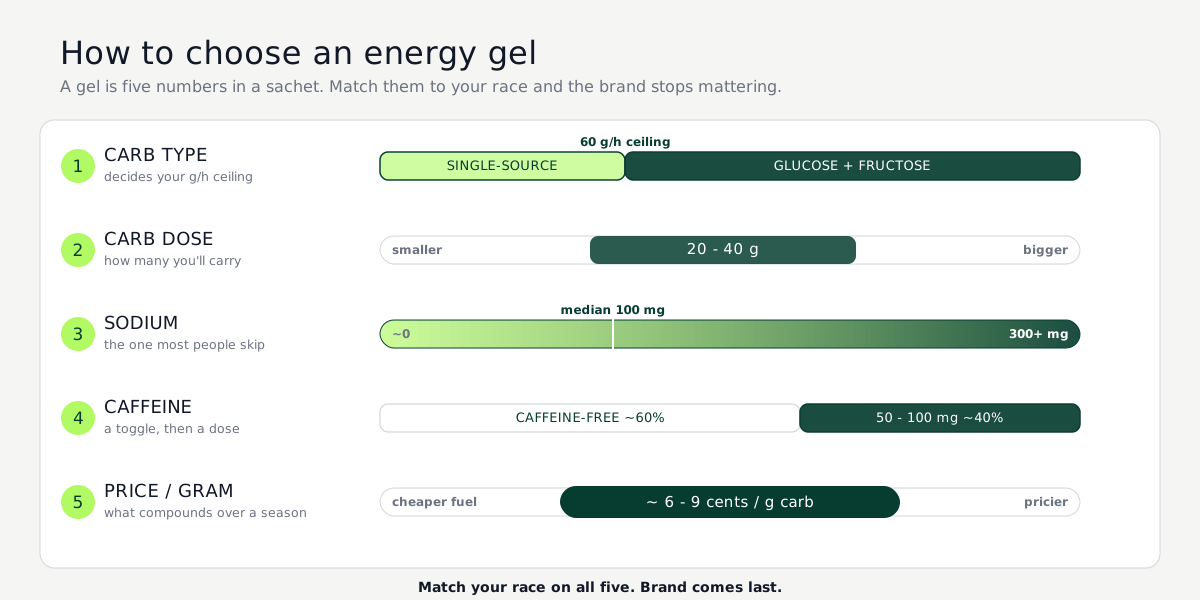
There are maybe two hundred energy gels on the market and the marketing makes them sound completely different. They are not. Strip away the packaging and a gel is five numbers: how much carb, what kind of carb, how much sodium, how much caffeine, and what it costs per gram of carb. Once you can read those five numbers, the choice stops being a brand-loyalty question and becomes a matching exercise. This guide is how to read them.
If you would rather skip straight to filtering, our gel catalogue puts every gel we track side by side and lets you sort by carbs, sodium, caffeine, brand, or price. The rest of this guide is how to decide what to filter for.
1. Carb type decides your ceiling
This is the single most important attribute and the one labels bury. There are two families:
- Single-source (glucose, or maltodextrin, or "glucose syrup"). Absorbed through one intestinal transporter (SGLT1), which saturates at roughly 60 grams of carb per hour. Cheaper, simpler, and completely fine for anything under about two hours.
- Multi-transportable (a glucose-fructose blend, usually labelled 2:1 or 1:0.8). Fructose uses a second transporter (GLUT5), so the two together push the absorbable ceiling toward 90 grams per hour and beyond.
The rule that follows is simple. If your target intake is at or below 60 g/h, single-source is all you need and you should not pay extra for a fructose blend. If you are pushing past 60 g/h (long course, gut-trained, racing over two and a half hours) you must use a glucose-fructose gel or you will saturate, the carb will sit in your gut, and you will get the bloating that athletes blame on "too many gels" when the real problem was the wrong gel. The carbs-per-hour guide covers how to find your number; the gut-training guide covers the physiology.
The good news for long-course athletes is that the market has shifted this way: of the 300-plus gels in our catalogue, more than half are now glucose-fructose blends. The catch is that very few labels say so in plain language, which is why we classify each gel's carb type for you in the gel catalogue.
2. Carb dose sets how many you carry
Gels run from about 20 g to 40 g of carb each. This is pure logistics. A 40 g gel hitting 80 g/h means two gels an hour; a 22 g gel means closer to four. Over a five-hour race that is the difference between carrying ten sachets and carrying eighteen. Bigger-dose gels mean less to carry, fewer wrappers, fewer "did I take one?" moments, but they are also a bigger single bolus on your stomach. Match dose to how you like to fuel: steady sippers want smaller, frequent gels; set-and-forget athletes want the big ones.
You can sort the catalogue by carbs per gel directly, or see the highest-carb options on the most carbs per gel leaderboard.
3. Sodium is the attribute most people ignore
Most athletes choose a gel on carbs and caffeine and never look at sodium, then wonder why they cramp. Gel sodium ranges from near zero to over 200 mg per gel, a 40-fold spread. Whether you need the high-sodium ones depends entirely on your sweat: a heavy, salty sweater in the heat can lose over 1,000 mg of sodium an hour and should bias toward gels that carry their own sodium, while a light sweater in cool conditions is fine on the low-sodium ones and can get the rest from drink mix or tabs. Do not double-count: if your drink and your electrolyte tabs already cover sodium, your gel does not also have to. Work out your number with the sweat and sodium guide, then filter accordingly.
4. Caffeine is a yes/no, then a dose
Roughly two in five of the gels we track carry caffeine, usually 50 mg to 100 mg each. Caffeine is a genuine ergogenic aid (roughly 2-4% performance benefit at 3-6 mg/kg), but a gel is just a delivery vehicle for it, and three rules keep you out of trouble:
- Plan the total dose across the race, not per gel. A 70 kg athlete wants 210-420 mg total. If three of your gels are caffeinated at 100 mg each, that is your whole budget.
- Timing beats quantity. Caffeine peaks 45-60 minutes after you take it, so the caffeinated gel belongs before the part of the race that hurts, not at the finish.
- Most of your gels should be caffeine-free so you can place caffeine deliberately instead of dosing it by accident every time you fuel.
The caffeine guide has the full dosing protocol. When you shop, treat caffeine as a filter you toggle, and keep a non-caffeinated option in the mix.
5. Price per gram of carb is the number that compounds
A gel's sticker price is close to meaningless because the sachets hold different amounts of carb. The honest metric is cost per gram of carbohydrate, because carb is what you are actually buying. A 2.50-euro gel with 40 g of carb (6.3 cents/g) is cheaper fuel than a 1.80-euro gel with 22 g (8.2 cents/g), even though the second one looks cheaper on the shelf. Over a marathon build with 30-plus long runs, that gap is real money. Sort the gel catalogue by price, or compare your shortlist directly so the per-gram maths is done for you.
Putting it together: choose by race
These are starting points for a gut-trained athlete in temperate conditions. Adjust toward higher sodium for heat and heavy sweat.
| Race | Carb type | Sodium bias | Caffeine |
|---|---|---|---|
| 10K / parkrun | None needed; optional single gel pre-start | Low | Optional, pre-start |
| Half-marathon | Single-source | Low to moderate | One caffeinated, late |
| Marathon | Single-source, or glucose-fructose if over 3:30 | Moderate | Two, placed deliberately |
| 70.3 / long course | Glucose-fructose (2:1) | Moderate to high | Saved for the run |
| Ultra (4 h plus) | Glucose-fructose, mixed with real food | High | Used sparingly, late |
A four-step buying process
- Get your carb-per-hour number from the planner or the carbs-per-hour guide. That tells you single-source versus glucose-fructose.
- Get your sodium-per-hour number from the sweat-sodium guide, and subtract whatever your drink already provides.
- Filter the gel catalogue to that carb type and sodium range, toggle caffeine to taste, and sort by price per gram.
- Put your top three in compare and pick on price and dose. Then, and this is non-negotiable, train your gut on the winner before race day. Never debut a gel in a race.
Compare before you commit
The whole point of NutriFinder is that you do not have to take any brand's word for it. Open the gel catalogue, filter to the numbers this guide told you to care about, add up to three to compare, and look at carbs, sodium, caffeine, and price in one table. If you want the carb target, sodium target, and a per-30-minute fuelling timeline for your specific race, the race-day planner builds it free, no signup for the first plan.
Frequently asked questions
What should I look for when buying energy gels?
Five numbers: carb type (single-source versus glucose-fructose), carb dose per gel, sodium, caffeine, and price per gram of carbohydrate. Match those five to your race and the brand stops mattering.
Do I need a 2:1 glucose-fructose gel?
Only if your target intake is above 60 g of carbs per hour. Below that, single-source glucose or maltodextrin gels absorb fine and you should not pay extra for a fructose blend; above it, a glucose-fructose gel is mandatory because glucose alone saturates its intestinal transporter at roughly 60 g/h.
How many gels do I need for a marathon?
Divide your hourly carb target by the gel's carb dose. At a typical marathon target of 60 g/h, a 30 g gel means two per hour from minute 30 to the final 30 minutes - roughly six to seven gels for a 3:30-4:00 finisher. Bigger 40 g gels mean fewer sachets to carry; small 20 g gels mean more.
Are caffeinated gels better than regular gels?
Caffeine genuinely works (roughly 2-4 percent performance benefit at 3-6 mg per kg of bodyweight), but a gel is just the delivery vehicle. Plan the total dose across the race, place caffeinated gels 45-60 minutes before the hard part, and keep most of your gels caffeine-free so you dose deliberately.
Does the sodium in energy gels matter?
Yes, and it is the attribute most athletes ignore. Gel sodium spans from near zero to over 200 mg per gel; heavy, salty sweaters in the heat should bias toward gels that carry their own sodium, while light sweaters are fine on the low-sodium ones. Do not double-count sodium your drink mix or tabs already provide.
Which energy gel is the cheapest?
Judge by cost per gram of carbohydrate, not sticker price. A 2.50-euro gel with 40 g of carb (6.3 cents per gram) is cheaper fuel than a 1.80-euro gel with 22 g (8.2 cents per gram). Over a marathon build with 30-plus long runs the difference is real money.
Research and references
The thresholds in this guide rest on the following peer-reviewed sources. Verify dose, side-effect profile, and contraindications against the primary literature.
- Jeukendrup AE. 2014. Sports Medicine. A step towards personalized sports nutrition: carbohydrate intake during exercise. PMID 24791914
- Burke LM, Hawley JA, Wong SHS, Jeukendrup AE. 2011. Journal of Sports Sciences. Carbohydrates for training and competition. PMID 21660838
- Thomas DT, Erdman KA, Burke LM. 2016. Medicine & Science in Sports & Exercise. ACSM Joint Position Statement: Nutrition and Athletic Performance. PMID 26891166
- Spriet LL. 2014. Sports Medicine. Exercise and sport performance with low doses of caffeine. PMID 25355191