
Guide
How to choose a sports drink
Educational content, not medical advice. Individual tolerance varies; persistent GI symptoms or any race-related medical concern should be reviewed by a sports dietitian or doctor.
A sports drink (carbohydrate drink mix) is fuel you can sip: a powder or ready-made beverage that delivers carbohydrate, and usually sodium, in the same fluid you hydrate with. Its defining variable is concentration - grams of carb per 100 ml - with 6 to 8 percent the classic isotonic zone.
A sports drink is the most efficient way to take carbohydrate, because you are drinking and fueling in the same motion. But it is also the format where one variable quietly decides everything: concentration, the grams of carb per 100 ml of fluid. Get it right and the drink empties from your stomach and delivers both fluid and fuel. Get it wrong and you have a bottle of syrup sloshing in your gut. This guide reads a sports drink the way your stomach does.
To filter as you go, the drinks catalogue lists every carb drink we track, sortable by carbs, sodium, caffeine, brand, and price. The 91 drinks in it average about 38 g of carb per serving, but the average hides the thing that matters.
First, decide what the bottle is for
"Sports drink" covers two jobs that pull in opposite directions.
- Fuel-led: a carbohydrate drink whose point is calories you can sip. This is what most of the drinks catalogue is, averaging high-30s grams of carb per serving, and it counts toward your hourly carb target the same way a gel does.
- Hydration-led: an electrolyte mix whose point is sodium and fluid, with little or no carb. If that is what you actually want, you are shopping the wrong shelf; the electrolyte tabs and powders guide covers those, and the dividing line is carbohydrate.
Decide which job you are buying for before you compare products, because it changes which numbers matter. The rest of this guide is about the fuel-led drink, the one doing carbs.
Concentration is the make-or-break number
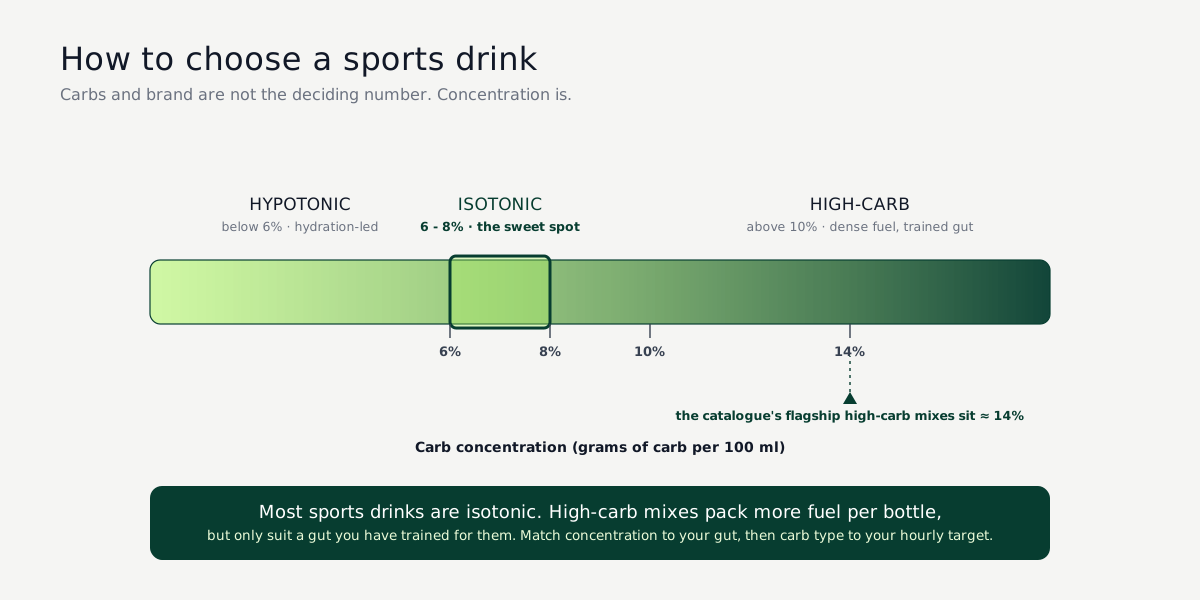
Here is the rule almost no label states and every gut enforces. Carbohydrate drinks are classified by concentration:
- Below 6% (hypotonic): empties from the stomach fastest, prioritises fluid over fuel. Good in heat or when hydration is the limiter.
- 6 to 8% (isotonic): the classic sweet spot. Roughly matches the osmolality of body fluids, so it delivers a useful balance of water and carbohydrate without sitting heavy. Most traditional sports drinks live here.
- Above 10% (high-carb / hypertonic): dense fuel in a small volume, which is exactly why the modern high-carb mixes exist, but it empties more slowly and pulls water into the gut before it clears. Comfortable only for a trained gut.
This is not academic. The flagship high-carb mixes we track (the 320-style 80 g-in-500 ml products) sit around 14% concentration, almost double isotonic, on purpose. They let you carry 80 g of carb in one bottle. The cost is that they demand the gut training to tolerate that density, and they are the wrong choice if you have not done that work. The gut-training guide is the prerequisite for going above isotonic; the carbs-per-hour guide tells you whether you even need that much.
Practical rule: if you mix your own, aim for the 6 to 8% band (roughly 30 to 40 g of carb per 500 ml bottle) unless you are deliberately running a gut-trained high-carb strategy. If you buy ready-dosed, read the carbs-per-bottle against the bottle volume and know which zone you are in before race day.
Carb type still sets your ceiling
Everything from the gel guide applies here too. A single-source drink (glucose or maltodextrin only) saturates around 60 g/h; a glucose-fructose mix pushes the ceiling toward 90 g/h and beyond. Our drinks catalogue is split almost evenly, about 32 single-source against 31 glucose-fructose blends, with the rest unclassified. So the rule is the same: at or below 60 g/h, single-source is fine and cheaper; above it, you need a glucose-fructose drink or the extra carbs just pool in your gut. See how to choose an energy gel for the same logic applied to the solid format, and drinks ranked by carbs per serving for which mixes actually carry enough to reach the upper band without a second bottle.
Sodium: drinks usually carry it, so do not double-count
Unlike gels, carb drinks tend to bring meaningful sodium. Across the catalogue they average about 290 mg of sodium per serving, ranging up to 750 mg in the saltier endurance mixes. That is useful, because a fuel-led drink can cover a chunk of your sodium need at the same time. But it is also a trap: if your drink already carries 500 mg per bottle, you do not also need high-sodium gels and electrolyte tabs on top, or you will overshoot. Work out your total sodium target in the sweat and sodium guide, then let the drink's contribution count toward it rather than stacking blindly.
Caffeine is rare here, and that is fine
Only about 1 in 8 of the drinks we track contains caffeine. A drink is a poor caffeine-delivery vehicle anyway, because you want to time caffeine to peak before the hard part of the race, not dribble it in over hours. Get your carbs and fluid from the drink and place caffeine deliberately with a gel or tablet. The caffeine guide has the timing.
Price: compare per gram of carb, not per sachet
Drinks span from about 0.40 to 8.60 EUR per serving in the catalogue, and the sachets hold wildly different amounts of carb, so the sticker price tells you almost nothing. As with gels, the honest comparison is cost per gram of carbohydrate. A high-carb mix can look expensive per serving yet be reasonable per gram because each serving carries 80 g. Sort the drinks catalogue by price and read it against the carb column.
Choose by use case
| Your situation | Drink type | Why |
|---|---|---|
| Hot day, hydration is the limiter | Hypotonic, under 6% | Empties fast, prioritises fluid |
| Standard long session, untrained gut | Isotonic, 6 to 8% | Balanced fuel and fluid, low GI risk |
| Long course, gut-trained, want fewer bottles | High-carb, glucose-fructose | 80 g per bottle, fewer refills |
| Already fueling with gels | Hydration-led or skip | Avoid double carbs; use electrolytes instead |
| Need 90 g/h or more | Glucose-fructose, gut-trained | Single-source caps out around 60 g/h |
A four-step buying process
- Confirm the job: fuel-led (carbs) or hydration-led (electrolytes). If hydration, switch to the electrolytes guide.
- Get your carb-per-hour number from the planner or the carbs-per-hour guide. That sets single-source versus glucose-fructose.
- Pick your concentration zone honestly. Isotonic unless your gut is trained for high-carb. Read carbs-per-bottle against bottle volume.
- Filter the drinks catalogue to that carb type, check the sodium against your total plan so you do not double up, and sort by price per gram. Then train with the winner before you race it.
Get a plan for your race
To turn this into carb, sodium, and fluid targets for your specific race and conditions, and to see which drinks fit, open the NutriFinder planner. It accounts for bottle size and drink concentration in its bike and triathlon fueling, returns your numbers, and the first plan is free with no signup.
Research and references
The thresholds in this guide rest on the following peer-reviewed sources. Verify dose, side-effect profile, and contraindications against the primary literature.
- Jeukendrup AE. 2014. Sports Medicine. A step towards personalized sports nutrition: carbohydrate intake during exercise. PMID 24791914
- Jeukendrup AE. 2010. Current Opinion in Clinical Nutrition and Metabolic Care. Carbohydrate and exercise performance: the role of multiple transportable carbohydrates. PMID 20574242
- Burke LM, Hawley JA, Wong SHS, Jeukendrup AE. 2011. Journal of Sports Sciences. Carbohydrates for training and competition. PMID 21660838
- Thomas DT, Erdman KA, Burke LM. 2016. Medicine & Science in Sports & Exercise. ACSM Joint Position Statement: Nutrition and Athletic Performance. PMID 26891166
- Sawka MN, Burke LM, Eichner ER, Maughan RJ, Montain SJ, Stachenfeld NS. 2007. Medicine & Science in Sports & Exercise. American College of Sports Medicine position stand: Exercise and fluid replacement. PMID 17277604