
Guide
How to choose an energy bar
Educational content, not medical advice. Individual tolerance varies; persistent GI symptoms or any race-related medical concern should be reviewed by a sports dietitian or doctor.
An energy bar is chewable, solid-food race fuel: carbohydrate in a form you can carry, that is more filling and durable than a gel but takes longer to eat and longer to digest. The number on the front is carbs per bar; the numbers that decide whether it belongs in your race are the ones the packaging plays down.
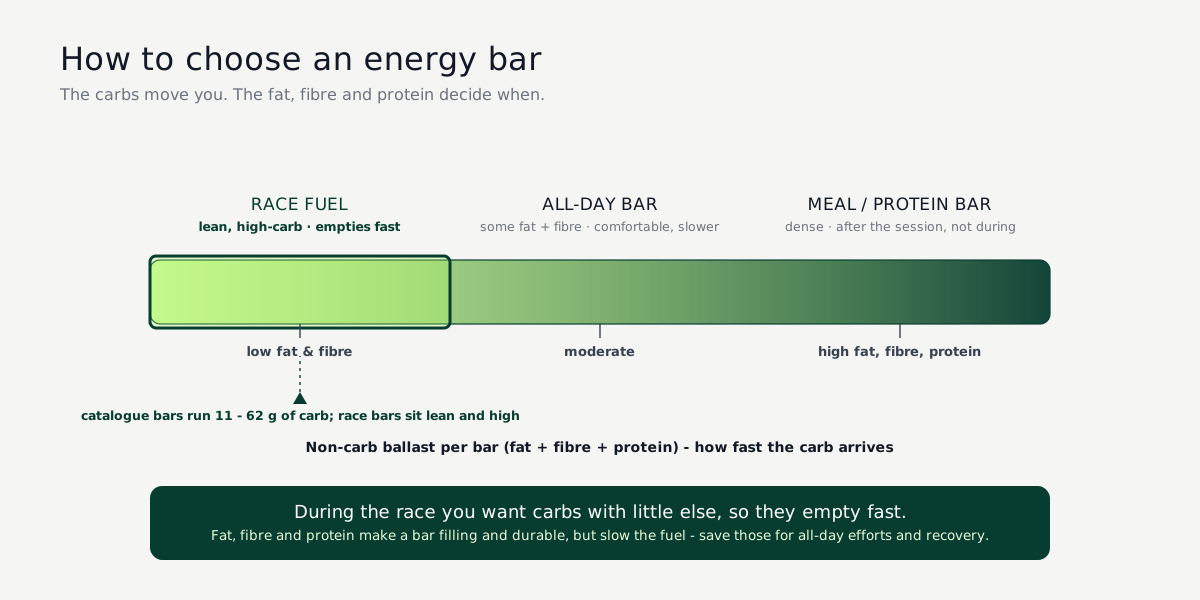
Energy bars are the most misunderstood format on the fuel shelf, because "energy bar" covers two very different products wearing the same name. One is lean, high-carb race fuel, built to empty from your stomach fast and deliver carbohydrate while you move. The other is a fibre-and-fat-rich snack or meal bar that happens to have "energy" on the wrapper and sits in your gut like the food it is. Both are legitimate; they are just for different moments. This guide is how to read a bar's numbers, tell those two apart, and decide when a bar beats a gel at all.
If you want to filter as you read, the bars catalogue lists every energy bar we track, 143 products across 24 brands, sortable by carbs, sodium, caffeine, brand, and price. They average about 30 g of carb per bar, which is squarely gel-and-chew territory in a chewier package.
What a bar is actually for
Start with the reason to carry a bar instead of a gel. A bar is solid food, so it satisfies in a way a gel never does, it survives a jersey pocket for hours, and it gives your gut something to work on across a long, steady effort. That makes bars the natural fuel for lower-intensity endurance: long rides, the settled middle of an ultra, all-day hikes, base-mileage sessions where you are grazing rather than dosing. The fueling-by-race-distance guide maps where each format fits across event lengths.
The cost is the same one chews carry, only larger: chewing takes teeth, breathing room, and time. At threshold, a gel goes down in two seconds while a bar is nearly impossible to eat well. On the bike or hiking the climbs, that cost is near zero. As with chews, match the format to the intensity at which you will actually be eating, not the intensity on the box.
The ballast decides how fast it fuels
Here is the number the label buries. A bar's carbohydrate is the fuel, but the fat, fibre, and protein it also carries slow how fast that fuel leaves your stomach and reaches your muscles. Fat and fibre in particular delay gastric emptying, which is exactly what you do not want mid-race. This is why two bars with identical carbs can behave completely differently: a lean bar empties fast and fuels; a dense one sits.
The catalogue makes the split visible. Of the bars that state protein, most, roughly nine in ten, carry 5 g or less, built as race fuel; a minority carry 10 g or more and are really snack or protein bars in the same aisle. Fat runs from 0 g to 16 g per bar, fibre from 0 to 10 g. For race day, read those three numbers as a group: the leaner the fat, fibre, and protein, the faster the carbohydrate arrives. Precision Fuel & Hydration's PF 60 Chew Bar is the extreme lean case, 60 g of carb with essentially no fat, closer to a solid chew than a traditional bar. Save the fat-and-fibre bars for all-day efforts and the drive home.
Carb type and dose, same rules as ever
Everything from the energy gel guide still applies: single-source glucose saturates around 60 g of carb per hour, and only a verified glucose-fructose blend pushes the ceiling toward 90 g/h. Bars span a wide dose, from 11 g of carb (ProAction's Nuts Bar, a snack) up to 62 g (+Watt's Long Race), with high-carb race bars clustering at 44 to 50 g: CLIF BAR at 44 g, High5's Energy Bar at 44 g, Styrkr's BAR50 and Santa Madre's UNUSUAL BAR at 50 g. Because a bar is bulky, dose sets how much fuel you carry per pocket, and how much chewing a given carb target costs you. Work out your hourly number in the carbs-per-hour guide first: at or below 60 g/h any carb type works, above it you need a stated blend, and if the wrapper will not tell you the ratio, assume single-source. The most carbs per bar leaderboard ranks the shelf by dose.
Sodium: some bars double as electrolytes
Most bars carry modest sodium, but the range is huge, from 0 mg to over 430 mg per bar, because several brands make deliberate high-sodium variants. +Watt's Carbo Jelly variant tops the catalogue at 432 mg, with Mountain Fuel's FeelGoodBar sodium version near 392 mg, Crown's Energy Bar 2.0 at 340 mg, and Styrkr's BAR30 rice bar around 314 mg. Same shelf, very different job: a high-sodium bar can genuinely stand in for an electrolyte product on a salty day. As always, the accounting matters, so set your target with the sweat and sodium guide, count what your bottle already carries, and do not stack a salty bar on top of a salty drink by accident. Read the variant badge, not just the product name.
Caffeine: a small, potent corner of the shelf
Only about nine of the bars we track carry caffeine, but where they do, the dose is real, up to 80 mg per bar in ProAction's Crono Bar PRO, Crown's HyperBar 45, and Named Sport's RACE FUEL BAR. That is a full caffeinated-gel dose in solid form, so treat it the same way: time it 45 to 60 minutes before the hard part of the race and count it against your total budget, do not eat it absent-mindedly because it was in the pocket. The caffeine guide has the dosing. Keep your default bars caffeine-free and place the caffeinated one on purpose.
Price per gram of carb, as always
Bars run from about 0.29 to 6.30 EUR each in the catalogue, and the sticker misleads because bars hold wildly different amounts of carb and ballast. Per gram of carb, the lean high-carb race bars are the value play: CLIF BAR works out around 3.3 cents per gram (about 1.46 EUR for 44 g), Santa Madre's UNUSUAL BAR near 3.6 cents, and High5's Energy Bar around 3.8 cents. Fat-and-fibre snack bars cost more per gram of usable race carbohydrate and deliver it slower, which is the wrong trade for race day and the right one for a café stop. Sort the bars catalogue by price and read it against the carb column.
Choose by use case
| Your situation | Bar choice | Why |
|---|---|---|
| Long ride or ultra, steady intensity | Lean high-carb race bar (40 g plus) | Solid fuel you can chew, empties fast |
| Hard running race, fuelling at speed | Gels or chews instead | Chewing a bar at threshold is a real cost |
| Pushing past 60 g/h | Verified glucose-fructose bar | Single-source saturates; blends raise the ceiling |
| Hot day, salty sweater | High-sodium bar variant (300 mg plus) | Fuel and meaningful sodium in one wrapper |
| All-day hike or café-stop endurance | Fat-and-fibre "all-day" bar | Filling and durable; slower fuel is fine here |
| Post-session or on the drive home | Protein or meal bar (10 g protein plus) | Recovery and satiety, not mid-race fuel |
A four-step buying process
- Get your carb-per-hour number from the planner or the carbs-per-hour guide. At or below 60 g/h any carb type works; above it, only verified glucose-fructose bars qualify.
- Read the ballast. For race fuel, favour low fat, fibre, and protein so the carbohydrate empties fast; for all-day food, dense is fine. Be honest about whether you can chew at your race intensity.
- Check sodium and caffeine against your plan, variants included, using the sweat-sodium guide so a salty bar does not double what your bottle already covers.
- Filter the bars catalogue to that shortlist, sort by price per gram, and put your top picks in compare. Then train on the winner; a bar you have never raced is still an experiment, and the gut-training guide explains why solid food especially needs the rehearsal.
Get a plan for your race
To turn this into carb, sodium, and fluid targets for your specific race, open the NutriFinder planner. Bars are a supported fuel type in its scheduling, so you can see how many your race needs and where they land in the timeline against gels, chews, and drink. The first plan is free with no signup.
Research and references
The thresholds in this guide rest on the following peer-reviewed sources. Verify dose, side-effect profile, and contraindications against the primary literature.
- Jeukendrup AE. 2014. Sports Medicine. A step towards personalized sports nutrition: carbohydrate intake during exercise. PMID 24791914
- Jeukendrup AE. 2010. Current Opinion in Clinical Nutrition and Metabolic Care. Carbohydrate and exercise performance: the role of multiple transportable carbohydrates. PMID 20574242
- Burke LM, Hawley JA, Wong SHS, Jeukendrup AE. 2011. Journal of Sports Sciences. Carbohydrates for training and competition. PMID 21660838
- Thomas DT, Erdman KA, Burke LM. 2016. Medicine & Science in Sports & Exercise. ACSM Joint Position Statement: Nutrition and Athletic Performance. PMID 26891166
- Spriet LL. 2014. Sports Medicine. Exercise and sport performance with low doses of caffeine. PMID 25355191